
Contact Junk It Mobile
How long: 5 minutes.
Call (843) 453-2333, text, or book online through the Stripe checkout. The information that actually changes the quote is short: your town, what is going in the unit, and roughly when you need it.
Have ready: the town, a one-sentence description of the debris, and your target date. Weekend dates should be raised first, because those fill earliest on the Grand Strand.
Choose the Right Service
How long: 5 to 10 minutes, inside the same call.
This is the step that saves people money, and it turns on material type as much as volume. Roofing shingles, tile, and plaster are dense enough to hit a tonnage cap while the box still looks half empty. Household furniture and yard debris are the opposite, filling volume long before weight becomes an issue.
Oversizing is the most common mistake. Undersizing costs you overage at $50 per ton or a second trip. A short conversation lands it correctly.
Have ready: an honest description. Understating a job to get a cheaper quote produces an overage charge, not a cheaper job.
Review Your Price
How long: immediate.
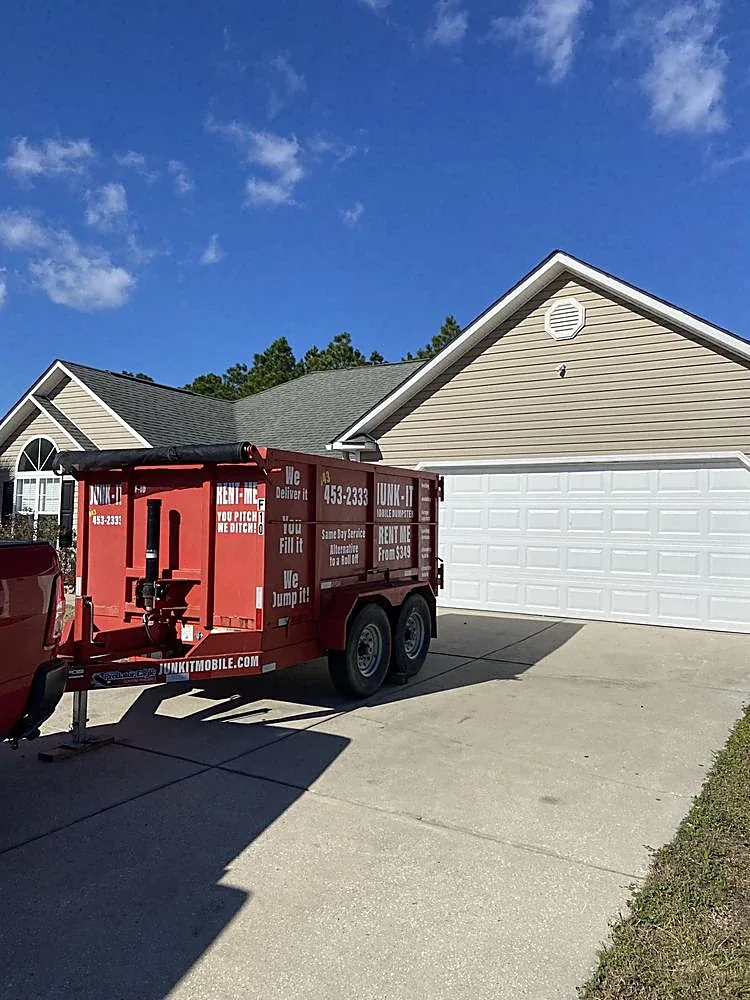
You get the full number before anything is scheduled: the size, the rate, the tonnage allowance included, any $30 surcharge items you mentioned, and the overage rate of $50 per ton prorated.
Nothing in that list is revealed later. Understanding how dumpster rental works at most companies means understanding that the base rate and the disposal fee are frequently quoted separately. Here they are quoted together.
Schedule Your Service
How long: 2 minutes, and it prevents most delivery-day problems.
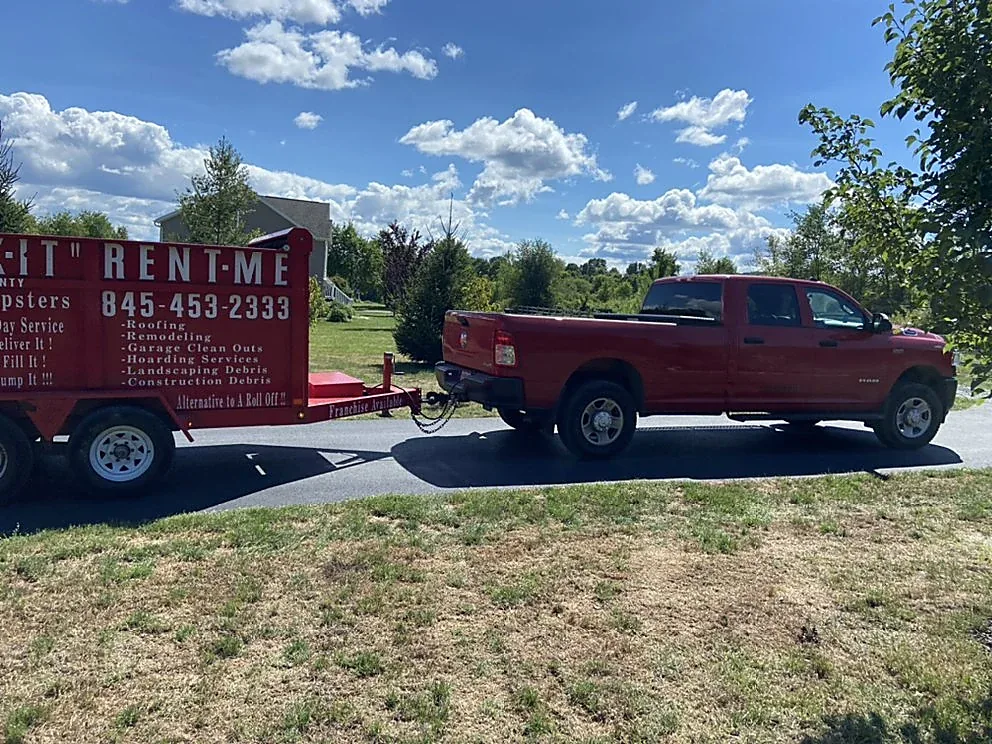
Where the unit goes gets settled before the truck leaves the shop. Off-street placement only, with driveways and parking pads strongly preferred. The company does not pull permits and does not place units on public streets or right-of-way.
Have ready on delivery day:
- Vehicles moved off the intended spot
- The approach clear of trash cans, basketball hoops, and low branches
- Gates unlocked if the spot is behind one
- Anyone with HOA rules consulted in advance
Grass placement. Available on request and at your risk. Turf, irrigation lines, and soft soil are vulnerable to compaction and rutting regardless of tire type, and the company does not warrant against that.
Complete the Cleanup
How long: 15 to 30 minutes on site.
The trailer gets towed into position and set down level on its rubber tires. There is no winch, no tilt bed, and no dragging across your surface.
The crew confirms the placement works before leaving, and repositioning at that moment is easy in a way it never is with a roll-off.
You do not need to be home if the spot is accessible and already agreed on. Plenty of customers text a photo of where they want it and handle the whole thing remotely.
How long: 3 days on the 10 and 15 yard units, a full week on 20, 25, and 30.
Fill it on your own schedule. Two rules matter for the pickup to go legally and smoothly:
- Keep the load below the top rail. An overloaded trailer cannot travel, and a return trip after you level it costs time on both sides.
- Keep prohibited material out. Paint, dirt, concrete, and raw garbage such as food or human waste. A contaminated load can be refused at the facility.
Running long? Extending a 10 or 15 yard rental to a full week costs $100, and arranging that before the window closes is simpler than sorting it out afterward.
We Haul It Away
How long: one phone call, then 15 minutes on site.
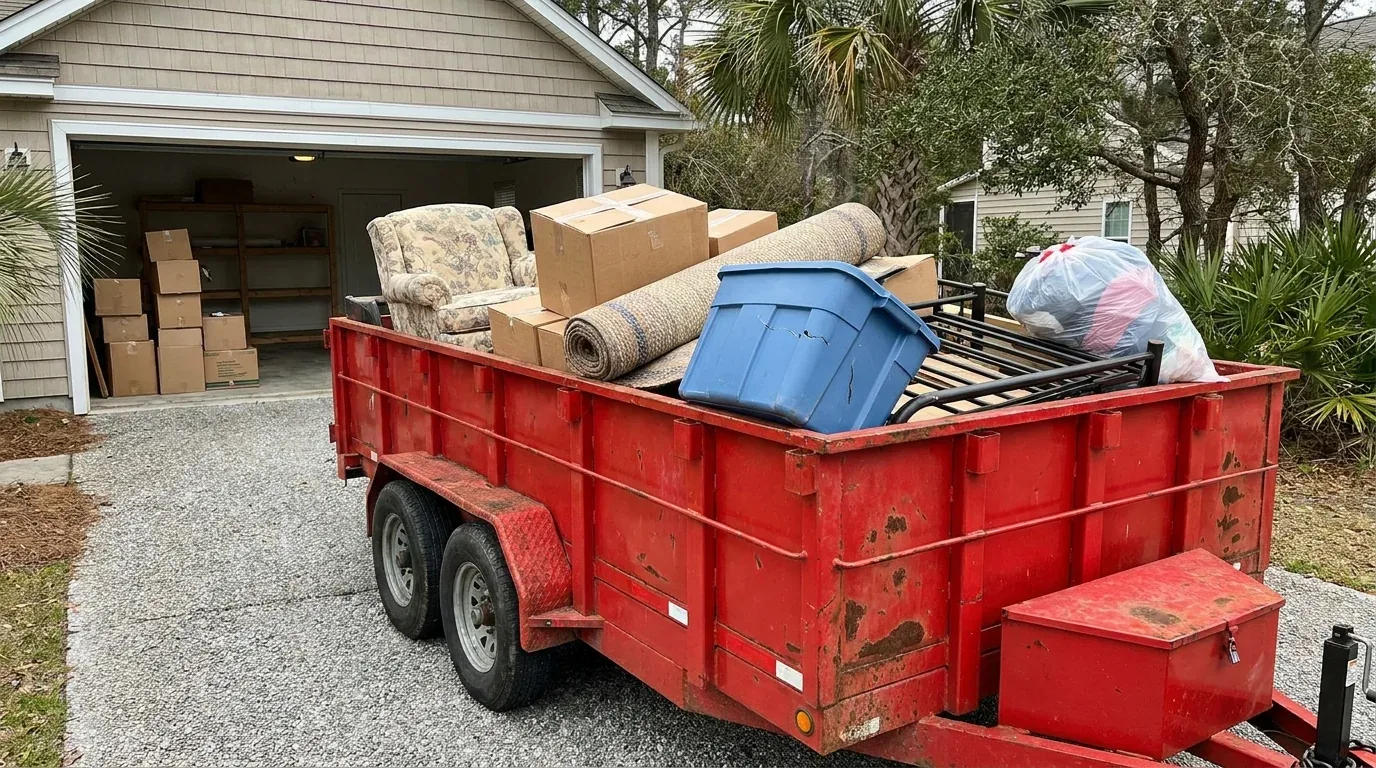
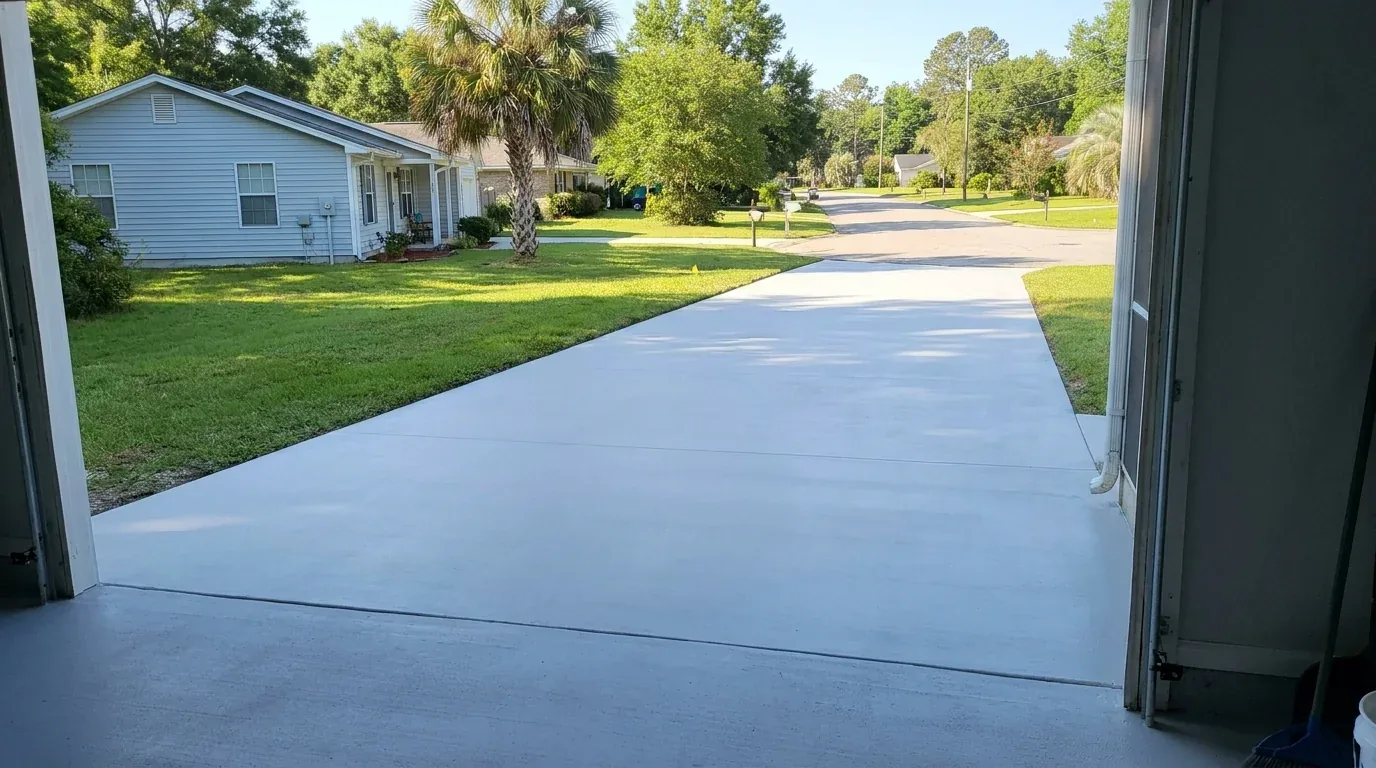
Call when you are finished. The trailer gets hitched and towed out, which is the same motion in reverse and just as harmless to what is underneath.
The load goes to the disposal facility and gets weighed. If it came in under the included tonnage, nothing further is owed.
If it went over, the overage bills at $50 per ton prorated, so four hundred pounds over costs a fraction of a ton rather than a full one.
Payment: cash, credit card, or Zelle, with Stripe handling anything booked online.
Why How Dumpster Rental Works Here Is Different
The sizing conversation and the up-front quote exist for the same reason: the two most common complaints in this industry are a surprise disposal charge and a container that was the wrong size. Both are avoidable at the quoting stage and expensive to fix afterward.
The placement conversation exists because delivery-day failures are almost always access problems, not equipment problems. Two minutes of planning removes most of them.
Six Steps. No Surprises.
Questions About the Process
You call with your town and a description of the debris, get sized into the right unit, and receive a flat quote covering the rate, the included tonnage, and any surcharge items. Delivery places the trailer on your driveway.
You fill it over three days on the smaller units or a week on the larger ones, then call for pickup. Payment is due at completion by cash, card, Zelle, or Stripe for online bookings.
No, as long as the placement spot is accessible and agreed on beforehand. Many customers text a photo of where they want the unit and never meet the crew. If the spot is behind a gate, it needs to be unlocked.
Same-day is often possible in Myrtle Beach when a unit is in stock, and next-day is usually straightforward. Aynor, Loris, and Pawleys Island are routed rather than dispatched on demand, so a day or two of notice matters more there. Weekends fill first everywhere.
The overage bills at $50 per ton, prorated. There is no penalty rate and no flat overage fee. Going a few hundred pounds over costs a proportional fraction rather than a full ton, and you are told the number after the load is weighed at the facility.
Yes. Extending a 10 or 15 yard rental to a full week costs $100. Calling before the original window closes is the clean way to handle it.
That gets resolved on the spot rather than abandoned. Because the unit is towed rather than winched, repositioning is straightforward, and the crew confirms the placement works before leaving.
The situations that genuinely fail are blocked approaches and low overhead clearance, which is exactly what the step 4 conversation is designed to catch ahead of time.